In mid-April, I attended the 10th annual ACA Summit hosted by Angel Capital Associationin San Diego. With about 600 people in attendance from dozens of countries, it was an excellent chance to get tuned into the latest trends happening in angel world at large.
And since Angel Investing is now a global phenomenon, it is interesting to note that ACA Summit can have two faces. On one hand, it is a very international gathering of Angel investors and yet sometimes the content reflects the fact that ACA is primarily an association of US Angel investors, for example by showing trends without regard that Canadian angels are just across the border.
The international range of attendees was striking, with many delegations from various European countries; Latin American countries like Mexico, Chile and Barbados; India; a particular concentration from Australia and New Zealand and of course Canada. Regarding this antipodean concentration, one attendee found it odd that there were more of participants from halfway around the world than from Canada.
I am a member of the program committee for Canada’s own 2015 NACO Summitwhich is being held October 6-8 in Niagara-on-the-Lake, Ontario, right on the US frontier. I see a huge opportunity to learn and connect with more US and global angels.
Each year, the Angel Resource Institute publishes statistical information and trends in US Angel investing and at ACA released their 2014 Halo Report.
I’ve chosen some personally curated highlights both of that report and the overall conference:
Overall US Angel investment was about US$25 billion in 2014, surpassing venture capital investments. This represents over 300,000 investors in over 70,000 deals. We continue to have less comprehensive data for Canada, but we still lag on a per capita basis, but the gap is narrowing.
Although Crowdfunding was a major topic of discussion, it is still less than 2% of the above $25 billion figure, definitely lagging places like the UK where it is already at 5%.
Median deal size grew over 10% to $2 million in 2014, when co-investment is included. Median pre-money valuation grew 20% to $3 million.
The largest region for deal dollars (17.2%) was the Great Lakes Region (from Wisconsin to Ohio), surprising to those who thought most deals happen in California. Further, almost 50% of all deals are in states on the Canadian border, clearly presenting cross-border syndication opportunities.
Perhaps because of high valuations in the tech “hot spots”, such as New York City and California, more syndication across greater distances was reported, which goes against the traditional notion of investors focusing within a one-hour drive. Again, while the studies of greater cross-country syndication didn’t extend into Canada, it is easy to extend this trend cross-border. A drive could be to focus on those sectors requiring specialized skills such as medical technologies and life sciences.
There were a lot of great sessions on emerging, and ongoing, issues, such as crowdfunding, the new SEC Regulation A+ (mandated by the JOBS Act to simplify raises up to $20 million even from non-accredited investors), an ever increasing push to build new and innovative Angel Funds and even post investment Board governance.
In that vein, I ran an open panel on “Best Practices to Build a Private Equity Portfolio – Tools and Strategies”. What was notable was how primitive such angel portfolio management really was. One participant suggested angels portfolio management was comparable to that of public company portfolios 100 years ago. As Angels learn that a passive approach with little portfolio management is sub-optimal, leading Superangels, the advanced Angel groups and the trend to angel funds are all pushing for more professional portfolio management. Although historically they have worked separately, the increased involvement of Family Offices in the world of angels is also starting to drive greater portfolio discipline. New software tools are emerging to help here as well, such as Seraf – Portfolio Management for Angel Investorswhich was built by angels unable to find a way to automate their portfolio management.
In summary, ACA Summit 2015 was a fabulous opportunity to meet, network and learn from some of the best global angels and understand about emerging models and best practices. Many side bar conversations, dinners and drinks in the garden were packed with wisdom from around the world.
In October, our own NACO Summit will be a great opportunity for Canadians to similarly share and learn and to connect with a more global perspective as our Angel ecosystem continues to grow from strength to strength.
The acquisition of MKS by PTC in 2011, caused me to reflect a bit on what good acquisitions might look like and what they might teach us about building (sometimes elusive) long term shareholder value. As a result, over the last 6 months, I’ve progressively assembled a collection on the most significant acquisitions in the Waterloo area. To my knowledge, such information has hitherto never been collected. We all love to speculate, but it is more productive to ground that speculation with facts.
The following table is intended to summarize value creation through the lens of several key benchmarks.
Rank
Company
Acquiror
Acquisition Price [4] (US$M)
Date Acquired
Date Founded
Company Age (years)
Employees
LTM Sales (US$M)
NOTES
1
Pixstream
Cisco
369
Dec 21, 2000
1996
4
196
5.4
2
2
Dalsa
Teledyne Technologies
341
Feb 14, 2011
1980
31
1000
200
3
3
MKS
PTC
304
May 31, 2011
May 1, 1984
27
360
75
4
Mitra Imaging
AGFA Healthcare
252
Jan 3, 2002
1990
12
400
50
5
Bluegill
Checkfree
250
Apr 28, 2000
1996
4
150
20
5
6
Unitron
Phonak
91
Nov 22, 2000
1965
35
300
63
5
7
SlipStream
RIM
91
Jun 1, 2006
2000
6
120
13
7
8
Tsavo Media
Cyberplex
75
Jun 10, 2010
2001
9
120
110
8
9
Watcom
Powersoft
74
Feb 11, 1994
1981
13
100
8.0
9
10
LivePage
Janna Systems
68
Sep 20, 1999
1990
9
12
1.0
10
11
EMJ
Synnex Canada
64
Jul 14, 2004
1979
25
350
303
12
12
DspFactory
AMI Semiconductor
51
Sep 9, 2004
1998
6
75
16
13
Maplesoft
Cybernet Systems
50
Sep 1, 2009
Apr 30, 1998
21
50
12
13
14
PrinterOn
Samsung
40
Sep 2, 2014
2000
14
50
10
15
SS Technologies
Woodhead Industries
35
Jul 31, 1998
1991
7
75
50
14
16
Reqwireless
Google
32
Jun 23, 2005
2001
4
15
1
17
TribeHR
NetSuite
30
Oct 22, 2013
2009
4
24
4.5
18
18
GBG
HighJump Software
26
Nov 1, 2006
1991
15
200
22
11
19
PostRank
Google
25
Jun 3, 2011
Mar 1, 2007
4
20
0
20
Kaparel (Pixstream)
Rittal
21
Dec 10, 2000
1996
4
30
7.1
17
21
VideoLocus
LSI Logic
20
Nov 14, 2002
May 1, 2001
2
17
0
22
RapidMind
Intel
19
Aug 19, 2009
2004
5
25
3
23
BufferBox
Google
17.5
Dec 30, 2012
2011
2
10
0
24
Software Metrics
Equitrac
8
Feb 1, 2000
Sep 1, 1992
8
35
3
16
25
Volker Craig
NABU
5.9
1981
1973
8
45
5.9
TOTALS
2 364
11.2
3 779
983
NOTES:
Sources: public records, internet, personal recollections and interviews with 25 key ecosystem participants. In the interests of data utility, I welcome any revisions or comments regarding accuracy or completeness.
All data are “normalized” into US Dollars, using an exchange rate current on the date of the acquisition. The use of US$ reflects the fact that most technology companies are really valued in US$ and hence that makes comparisons, both across the data and to other jurisdictions, more meaningful.
The sample set is limited to my sense of what a technology company is – your mileage may vary.
Acquisition PRICE includes cash, stock and post deal incentives, including earn outs.
Several companies were re-acquired after the first acquisition (e.g. WatCom and LivePage). These follow on transactions are not reflected in this data.
Some companies spun out several acquisitions, such as Kaparel which was sold out of Pixstream or SS Technologies, originally spun out of Sutherland Shultz.
AGE represents the time in years from founding to the (first) acquisition.
EMPLOYEES is the world wide count.
SALES, given the high growth nature of many of these businesses, levels generally reflect the run rate at acquisition, rather than purely using an LTM (“Last Twelve Months”) measure.
CONCLUSIONS
The above data suggests a lot of trends and insights. It contains a wealth of insights, and also the individual narratives of each of these companies is, in itself, worthy of more discussion and analysis. In aggregate, however, the data suggest some key ideas to me:
Acquisition prices are a great proxy for long term shareholder value, precisely because leading global technology companies provide an informed, third party valuation that likely has way more science than most earlier stage technology company valuation.
Building larger companies takes time. The myth of the “quick flip” startup is (mostly) just that.
As I discuss in my next post, building major technology companies is hard. We don’t (yet) seem to have “cracked the code” on this and need to learn how to build more over time.
The aggregate scale of these companies, at the time of their acquisition, is materially significant to our region – almost 4 000 employees and almost $1 billion in revenue.
Companies take much longer to build than most would expect. While the range in ages from 2 to 35 years is quite diverse, the average age of 11.2 years shows the time, resources and hard work to build real businesses.
Acquisitions are good for our economy. Many people consider acquisitions to be a bad thing, but for those companies that were already at reasonable scale, most have continued to grow post acquisition. In addition to the wealth generated and its spinoffs, the acquirors bring new ideas and often jobs to our region. This is yet another reason why building larger technology companies is so important.
I am hoping that this data collection regarding acquisitions, and my initial take on conclusions, might stimulate further discussion around the notion of building significant value in businesses.
Please feel free to comment, or even contact me, with insights, questions and corrections.
“Expectation is the mother of all frustration.” – Antonio Banderas
Meeting requests are an amazing invention. Pioneered, and standardized, almost 20 years ago by companies like Microsoft (as part of Outlook/Exchange), Novell (Groupwise) and Lotus (now part of IBM Lotus Notes) this innovation had great promise to automate an essential, yet completely routine, aspect of modern life.
The ascendency of meeting request usage, also rides several trends:
In the 1990s, I had an Executive Assistant who scheduled my time, acted as a “gatekeeper” and also worked on many projects. She was a master tactician who managed to keep 3 or more Type A executives productively multi-tasking. In many ways, sadly, such personal assistance is being subsumed by..
Increasing computational power means that automation of routine tasks, personalized to the needs of individuals is much more of a reality,
The mobile revolution has made meetings much more multi-modal and virtual, but also means that most executives must be productive even while being mobile nomads, and
Calendars have migrated from paper – I switched about 20 years ago – to desktop computers using Outlook and the like, and now to the ubiquitous smartphone and tablet devices. Such mobile devices are both convenient for calendars, but also frustratingly fiddly places to enter complex meeting details.
Thus, enter the humble Meeting Request which has swelled in popularity. I received my first such request from an Outlook/Exchange user around 2000 and they remained rare until perhaps the last 5-10 years. Now they seem to be everywhere.
In homage to my friend and colleague, Jim Estill, the quintessential time management guru, I ought to be cheering this time saving invention.
And, yet my enthusiasm is sorely tinged by a frustrating implementation resulting in suboptimal user experience …
Top 10 Meeting Request FAILs:
Trojan Horse: It has always seemed odd to me that a third party inviting me to a meeting could embed their own meeting information in my calendar, and yet I am unable to edit this “foreign” request that has invaded my calendar.
Split Personality: If Jennifer invites me, Randall, to a meeting, then why does my meeting title say “Meeting with Randall” instead of “Meeting with Jennifer”? Computers are designed to automate routine tasks so there is absolutely no excuse for this one.
No Annotation: I write comments in the notes fields of my calendar all the time. Why can’t I say, for example, “Joe is a bit dodgy” or “First met back in 2001”?
Duplication: Many times I receive a meeting request for a meeting that I have already carefully crafted an entry in my own calendar. Again, computers are supposed to be smart enough to figure these things out and merge them in an intelligent way.
Bad Versioning: Many times when meeting information is changed, such as time or venue, the update isn’t seamless. For example, it is common to have both the original and the updated version lingering in my calendar.
No Scheduling: Meeting requests are often used as trial balloons in trying to schedule busy people into meetings. The endless rounds of “Accept”, “Maybe” or “Decline” responses can end up being quite frustrating, especially for many person meetings. These, often fruitless, interchanges underscore the fact that meeting requests don’t automate routine scheduling. Instead, people have to resort to tools like Doodle to vote on alternatives, and then manually schedule the winning result.
Verbosity by having superfluous words in the limited real estate of the meeting subject line. E.g. pre-pending “Invitation:” or “Updated Invitation:” onto the front of a subject, effectively burying the important words. Many times they are put there to increase the impact and readability of the email subject line to ensure opening, but distract in the actual Calendar entry.
Invitations from GoogleEnterprise Apps or GMail tend to be the most arcane and ugly. Originally, I chalked this up to Google Calendar‘s relative immaturity compared to Outlook, but the brutally long notes and long subject lines continue to stand out as worst in class, almost to the point that I dread getting invited by Google users.
Lack of Anticipatory Computing: in an age where mobile devices know location, existing meetings and other personal habits, the trend to predictive intelligence could be incorporated into smarter meeting requests. For example, combining meeting requests with shared “Free/Busy” data could remove many manual scheduling steps.
No Personalization: Like my contact list, I put a fair bit of thought into crafting a calendar that is both useful now, but also provides a detailed audit trail of my business interactions. To do this, I use conventions, categories and other techniques that, sadly, cannot be injected into these un-editable meeting requests that instead reflect the third party initiator’s preferences.
Do let me know in comments if I missed any major points.
Given the power of networked computing to automate, why is there such a lack of excellence and progress in this particular area?
In fairness, I believe that part of the problem lies in the interplay between competition and the vagaries of formal industry standards. That said, this should be no excuse.
It is admirable that, unlike word processing formats, the various pioneers started to develop standards call iCalendar (and later vCalendar) around 1997 to standardize file formats (like .ical and .ics) and email server interactions. I do know the Microsoft attempted to extend the functionality with some very useful things around that time. But, for some reason, a great idea got off to a good start, but seems frozen at an almost Beta level of functionality.
To conclude, please read this post, not as a gripe, but instead as a call to action to developers to help take the humble meeting request to the next level of user experience. Any takers?
Almost four and a half years ago, I penned what some called the obituary of Blackberry (see “How You Gonna Keep ‘Em Down on the Farm”). My intentions in writing that missive were, in fact, quite the opposite. Back in 2008, a year after the first iPhone, Blackberry didn’t appear to be heeding the threat of major market disruption, let alone making a response. I thought that writing such a post might incite some action. Sadly, while I got loads of reaction from all over the world, the one missing piece was that this was singularly not registering inside the “Faraday Cage” of RIM headquarters at Philip and Columbia in Waterloo.
For many years, to continuously hone my expertise as an investor and participant in the next generation mobile ecosystem at VERDEXUS, I have maintained a “production” device and a “testing” device which allows me to sample the greatest number of new applications and platforms in my daily business and personal life. At the time of the 2008 blog, I switched from Blackberry as production device and iPhone as testing device. At that time, I promoted iPhone to production and introduced an early Android device into the testing status.
The four and one-half years since then, representing four to five mobile device generations at the rapid pace in which these are deployed, has seen a lot of innovation and change in the mobile universe. The first production version of Android occurred one month after the aforementioned post. Today, over nine releases later, Android 4.2, known as Jelly Bean, is a mature and polished mobile platform.
Mobile user experience has, as it were, come up from the Farm and we are now definitely in Paree. It’s hard to imagine how things could get much better, yet an even more exciting future in mobile will undoubtedly unfold. The pace of change has been almost mind boggling, with Android appearing to move almost twice as fast as iOS, the more proprietary Apple platform running iPhone and iPad.
As a young platform, Android has long shown promise. Being an open source operating system primarily developed by Google, but customized by various device manufacturers, not to mention the ever-meddling carriers, has been both a blessing and a curse. Initially, Android seemed “rougher around the edges” and more techie in feel than the uber-polished and legendary iPhone experience, which is produced end to end by Apple.
Conversely, the limitations of the Apple closed ecosystem approach are starting overtake the advantages. There are numerous examples. If you simply want to plug in your device via USB and load music and other files, Android shines by bypassing the need to go through iTunes. While iTuneshas its advantages, many of us simply want more control over our cross-device media file deployments. Another even more telling example is the recent debacle in which Apple turfed the tried and true Google Maps application in favour of a badly implemented and incomplete version of their own. This is but a single example of where Apple’s legendary quest for control is wearing thin.
While giving more control to mobile application developers has its challenges, it is clear that no one company, no matter how sainted, can determine, let alone sully serve, the desires and needs of the entire mobile universe.
It is a combination of this clear advantage, coupled with the incredible progress inAndroid and its handset manufacturers, that has led me to promote my newest device to production and render the formerly top-billed iPhone second tier status of my test device.
For me that device is the Samsung Galaxy Note 2, which with its 5.5″ screen is sometimes dubbed a “phablet” (ie. a combination of phone and tablet). Essentially a super-sized Galaxy S3, this phone is nimble, fast in computational processing and with speedy network connectivity. I first saw Europeans use it a few months ago, a cool and capable device, but perhaps an acquired taste for some
Perhaps it is simply my poor vision, but the large screen size is versatile and a joy to work with for all sorts of browsing, content and documents. The S Penstylus, even for those who don’t want to do handwriting or line drawings, transforms the mobile browsing experience by removing the navigation problems on many sites with menus which are small on mobile screens. Samsung has even developed an SDK around the S Pen which could create a whole new application ecosystem, assuming this next generation stylus gains sufficient market traction.
Is my recent promotion of Android to top device spot the end of my quest for mobile perfection? Absolutely not! In fact, only one week ago, I personally promised my colleague Alec Saunders, the ubitquitous and transformational new VP of Developer Relations for Research In Motion, that I will definitely give the new Blackberry BB10 devices a serious try. And, not just because “Devs, Blackberrry Is Going to Keep on Loving You”. I truly do like much of what I’m hearing about their capabilities.
Stay tuned – the mobile world is a fascinating and ever changing one.
In the world of wine, the concept of terroir describes a centuries long process in which the climate, soil, grape varieties and dedicated vintners, symbiotically develop a unique “sense of place” for a wine region. A favourite of mine, the garrulous and quintessential Californian vintner, Randall Grahm, while trying to establish the old World notion of terroir in California postulates that it is a long term proposition and can take centuries to develop.
As both a wine lover and serial tech entrepreneur, I firmly believe that building a tech cluster is similarly a very long term process. Ironically, the epicentre of tech clusters is in California. The Silicon Valley, which got its start in the 1950s remains the major cluster worldwide as “… no other place as yet has the Valley’s scale and resilience.”
Although I started my tech startup career in the US, it was in the Canada’s leading tech cluster of Waterloo where I built major companies and was one person who got that cluster started. Like Silicon Valley’s origins in Stanford University, the Waterloo cluster was initially fuelled by University of Waterloo. Over time, a combination of executive and programming talent, capital and professional services capabilites led to the current state of almost 1000 technology companies. By contrast to Silicon Valley, Waterloo is a must younger cluster, having started just over 25 years ago compared to the 60 years of Silicon Valley. It continues to mature around some key ingredients such as global strategic marketing capabilities and sufficient capital to fund on a globally competitive basis. Experienced people may well be the most important ingredient in a cluster’s maturation.
Further, I feel that all who have been fortunate to build wealth and experience in business, owe an obligation to “pay it forward” to the next generation. My own contributions include significant startup mentoring, Board and strategic roles in organizations like Communitech and Innovation Guelph, and for the last 3 years a Board role and chairing Selection Committee for the Golden Triangle AngelNet (GTAN). In just 3 years, GTAN has grown to about 150 paid accredited investor members who bring a wealth of experience to the 25 funding transactions to date. And, it goes without saying, that many of those financings might not have happened without GTAN having emerged to fill a significant funding gap as VC’s became largely extinct. Acting as a superangel to syndicate angel network deals is a tremendously labour intensive exercise, but one that I and others believe will pay off in the long term economic prosperity of our region.
I firmly believe knowledge-based companies to be the key ingredient of our future economic prosperity, so such company-building competence is mission critical for our region, province, country and globally. As globalization occurs, we see more and more regions clambering to reap the riches of the innovative, tech startup world.
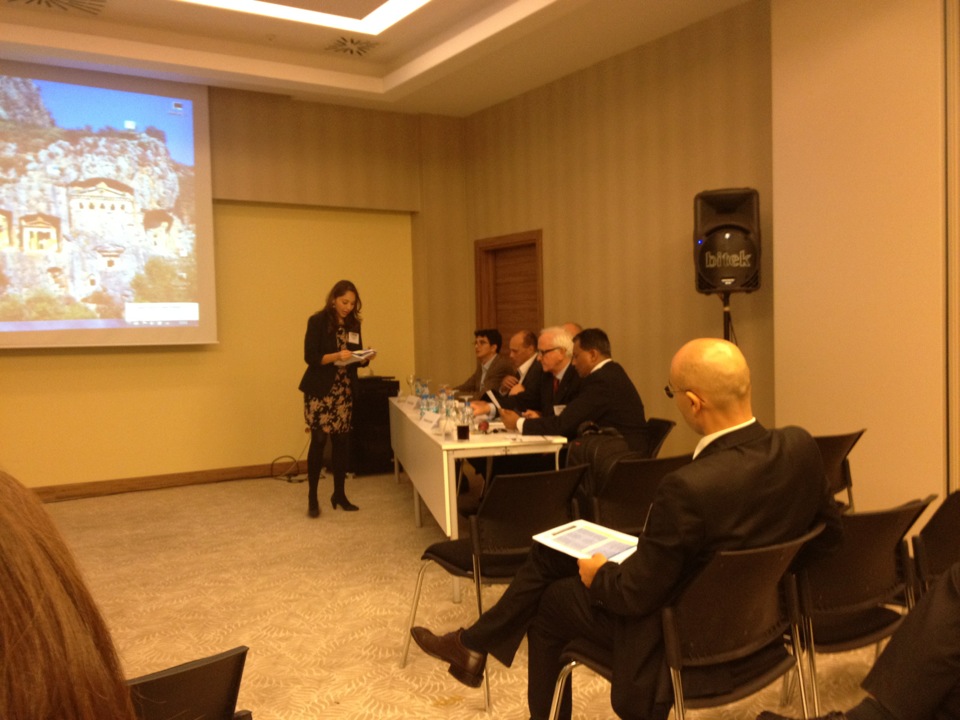
To that end, at Verdexus, we have always taken a transatlantic perspective, primarily to have a more global window on building companies that can achieve world leadership in their chosen businesses. Over the years, I’ve worked with startups across the United States and Europe in the dominant clusters such as Boston, Chicago, Silicon Valley, London, Munich, Berlin, Stockholm and more. To round out my experience, over the last few years, I’ve sampled some key emerging regions by volunteering as an expert judge in places as diverse as Brussels area, Warsaw and Torino. A week ago, I had the opportunity to judge startups associated with the European Space Agency in Toulouse France as well as in Istanbul, Turkey. The latter Istanbul venue, EU Venture Forum was jointly sponsored by EUREKA (the pan-European research and development funding and coordination organization) and Europe Unlimited from Brussels. Collectively, these more than a dozen regional events ultimately feed into a pan-European venture prize in Berlin in December.
It has been very instructive to visit various clusters. This grassroots view, from the perspective of startups, reveals much in common globally but also a few surprises. Based solely on interacting with local startups, on a global perspective, it is clear that culture and experience vary greatly across various Euroopean regions. For example, I was pleasantly surprised that Warsaw had some of the smartest and most sophisticated business startups I’d seen anywhere. And, remember, they are pitching in English which is not their native language. Conversely, the cluster around Torino appeared to have a long way to go before its startups would begin to measure up globally.
Pitching in Istanbul
Similarly, the startups I saw in Istanbul were impressive. Some companies, following a model also common to the emerging markets of Central and Eastern Europe, were essentially cloning an existing business model into the 80 million strong Turkish market. More significantly others were clearly building globally strong technology startups. One pleasant surprise was that, of the eight companies that I coached the day before the forum, three had women CEOs. This was a surprise for Turkey, but sadly women-led companies remain all to rare in Canada
The calibre of engineering and basic technology talent was very impressive. That said, it was also clear that the level of support ecosystem around these startups is very limited – at least compared to what we see here in North America. One direct challenge was that in Europe companies appear to receive generous R&D funding which seems to encourage more of an engineering mentality than a market-driven one. In essence, projects stay too long as “science projects” and the culture and skills to get projects to market seem to suffer as a result. Although this is a generalization, there are many exceptions.
In the area of capital, the meltdown in Venture Capital A Round investments is about 3-4 years behind what already occurred in Canada. One particularly European challenge is that more and more of the VC funds have moved their offices and focus from regional markets to London, meaning that companies in the regions often have less direct access to capital. Conversely, the growing role of Angel Networks and Superangels to fill the gap is still in its infancy in Europe. I suspect that will change over the next two or three years. Venture funders like to either be close (1 hour travel) to their portfolio companies or, at the very least, to have a local investor who can “provide adult supervision”. Increasingly, experienced serial entrepreneurs will be called on to fill that key local role as Angels and Superangels. It is clear that the notion of Tim Draper going to Estonia and finding Skype is definitely the exception rather than the rule.
And that takes me right back to the notion of “tech terroir”. As global innovation increases, and people around the world vie to build ever stronger tech startup ecosystems, it is the dedicates entrepreneurs in the sector who magically nurture these maturing ecosystems. As one of the entrepreneurs that I coached mentioned, she wants to:
“make innovation easier in Turkey and to make life easier for entrepreneurs”
So, in addition to building a great global business, she also takes time to help move the needle of her local ecosystem forward. It’s a very encouraging sign that continues to inspire me as I engage with the new globalized world of tech startups.
This summer I took time to re-read an oft-overlooked volume that I believe to be the essential to anyone working in marketing and innovation. In this review, I’ll provide a few examples of why this book needs more attention, particularly here in Canada where we definitely need to up our game in marketing of innovation and technology.
Clayton Christensen, as Associate Professor of Business Administration at Harvard Business School, is a leading academic researcher on innovation. Yet, he still manages to provide practical and pragmatic strategies that real companies can use. And, most importantly, his theoretical groundwork is based on extensive, data intensive research over longer period of time with real companies and markets going through disruptive innovation.
The latter term is often thrown around lightly in technology company circles. A Disruptive technology (or innovation) typically has worse product performance in mainstream markets while having key features that interest fringe and merging markets. By contrast, sustaining technologies provide improved product performance (and often price) in mainstream markets.
The book covers real markets, including the various generations of disk drives starting with 14″ drives in the 1970’s to today’s 2.5″ (and smaller) drives. By studying hundreds of companies that emerged, thrived and failed over a 25 year period, some clear patterns emerge. Further examples across a broad range of markets, include he microprocessor market, the transition from cable diggers to hydraulic “backhoes”, accounting software and even the transition of industrial motor controllers from mechanical to electronic programmable models.
The key message of the book is that the playbook for normal (“sustaining”) technology innovation must be thrown away for disruptive technologies. Disruptive technologies break traditional rules in many, often counter-intuitive ways:
Financial – typically disruptive technologies are more expensive and have lower performance than existing products. This effect causes financial managers to kill many such innovations.
Marketing: the normal rule to “listen to your customers” must be thrown away – instead many educated guesses with repeated failures are the only path forward.
Organization: given the ability of normal strategies to reject disruptive innovations, such practices as heavyweight teams (which silo the team with more autonomy) and even spin-outs are the order of the day.
Entrepreneurial writings, not to mention my own experience, encourage us to celebrate failure. Beyond the power of learning by trial and error, The Innovator’s Dilemma, for the first time, provides an analytical framework as to why such failure is so critical in new markets.
One area where the book could provide more guidance is that of differentiating disruptive from sustaining technologies. Such discrimination is absolutely critical to ensure the right strategic approach to the new technology is adopted. Generally easy with the benefit of hindsight, such determination can be very tricky, and error prone, when first confronted with such new technologies.
This is a book that anyone working with products in fast moving markets needs to re-read regularly. It surprises me that, 15 years after publication, how few product marketers and senior executives appear to have benefited from the deep wisdom Christensen imparts.
Building larger technology companies is critical for our future economic well being, yet somehow we seem to pay more attention to the seed and startup phase. This post and a subsequent missive, Wisdom from Recent Waterloo Technology Acquisitions, aim to analyze some recipes for building technology businesses to scale first from the perspective of recent companies and then specifically through the lens of local acquisitions. This pair of posts will be based on extensive data, but the findings are intended to start discussion rather than be the last word.
The importance of building new, innovative, and large, companies can’t be underestimated regionally, provincially and nationally. Here in Waterloo, with perhaps 10 000 jobs at a single behemoth, Research in Motion, the notion of job creation is particularly topical simply to lessen our dependency on such a large company.
My sense is that, of late, most of the focus centres around making startups: small, energetic and entrepreneurial software, web and mobile companies, some simply building a mobile application. And, even with the current notion of Lean Startups or our Venture 2.0approach, there is no question that building such early stage companies is probably an order of magnitude cheaper than it was back in the 1990’s While undoubtedly a good thing for all concerned – founders, investors and consumers all have so much more choice – has this led to a corresponding increase in new major businesses in the technology sector?
I see this as more of a discussion than a simple answer, and thus to start, I include the following table of my sense of how the numbers have changed over time. The following table provides some idea of how company formation has trended over the last 25 years, through the lens of scale rather than acquisitions:
[table “” not found /]
NOTES ON DATA:
Sources: public records, internet, personal recollections and interviews with 20 key ecosystem participants.
The definition of “big” is purposely somewhat arbitrary (and perhaps vague). I am using a threshold of 50 employees or $10 million in revenues, which is probably more indicative of these startups becoming mid-sized businesses.
INITIAL INSIGHTS:
This data, while helpful, can never provide a complete answer. However, it can guide the conversation around what I see to be an important economic mission for our region and country – that is, building more significant technology businesses. I’m sure there are no easy answers, but in shaping policy, it is important to base decisions on informed debate and research.
To that end, I would offer the following thoughts:
The current plethora of “lean startups” does not (necessarily) represent a clear path to growing those startups into larger businesses.
I suspect that, in some ways, multiplying small startups can retard the growth of larger companies. That said, the data are insufficient to prove cause and effect.
At the ecosystem level, we need to focus resource allocation beyond simple startup creation to include building more long term, and larger, technology businesses. Instead of spreading talent and other resources thinly, key gaps in senior management talent (especially marketing) and access to capital (B rounds and beyond) need to be resolved.
Even in day to day discussion, the narrative must shift so that entrepreneurism isn’t just about startups, to make company building cool again.
Canada holds many smart, creative and hardworking entrepreneurs who will undoubtedly rise to the challenge of building our next generation economy. Meanwhile, I’d welcome comments, suggestions and feedback on how we can build dozens or more, instead of a handful, of larger technology companies in our region.
If you are in any way connected to this story, see link to event invitation at end of this post.
In August 1972, just before the start of fall classes, a new arrival was causing a stir in the Math & Computer building at University of Waterloo – a brand new Honeywell 6050 mainframe size computer running GCOS (General Comprehensive Operating Supervisor) and TSS (TimeSharing System). The arrival of this computer (which quickly got nicknamed, “HoneyBun” and eventually “The ‘Bun”) set the stage for a whole new generation of computer innovators at University of Waterloo and was the foundation for many a computer and internet innovator.
In retrospect, it was a fortuitous time to be young and engaged in computing. A fluid group of enthusiast programmers, “The Hacks” (a variant of the term “Hackers” popularized by MIT, yet not to be confused with the later “Crackers” who were all about malicious security breaches), revelled in getting these expensive machines (yet by today’s standards underpowered) to do super-human feats. The early 1970’s was the decade when software was coming into its own as a free-standing discipline, for the first time unbundled and unshackled from the underlying hardware. The phenemena of the timing of one’s birth affecting whole careers is eerily (the years are the same as my own) described by Malcolm Gladwell in his 2009 book Outliers.
The Honeywell had a whole culture of operators, SNUMBs, LLINKs, GMAP, MMEs, DRLs, Master Mode and not to mention that infamous pitcher of beer for anyone who could break its security. To do so was remarkably easy. For example, one day the system was down, as was commonplace in those days. As it happened the IBM 2741 terminals were loaded to print on the backs of a listing of the entire GCOS operating system. Without the ‘Bun to amuse us, we challenged each other to find at least one bug on a single page of this GCOS assembler listing. And, remarkably for a system reputed to be secure, each of us found at least one bug that was serious enough to be a security hole. This is pretty troubling for a computer system targeted to mission critical, military applications, including running the World Wide Command and Control System (WWMCCS – ie. the nuclear early warning and decision mechanism).
Shortly after the arrival of the Honeywell, Steve Johnson came to the Math Faculty on sabbatical from Bell Labs. The prolific creator of many iconic UNIX tools such as Yacc, he is also famous for the quote: “Using TSOis like kicking a dead whale down the beach”. I suspect that few people realize his key role in introducing Bell Labs culture to University of Waterloo so early, including B Programming Language, getchar(), putchar(), the beginnings of the notion of software portability and, of course, yacc. It is hard to underestimate the influence on a whole generation at Waterloo of the Bell Labs culture – a refreshing switch from the IBM and Computing Centre hegemony of the time.
The adoption of the high level language B, in addition to the GMAP assembler, unleashed a tremendous amount of hacker creativity, including work in languages, early networking, very early email (1973), the notion of a command and utilities world (even pre-UNIX) and some very high level abstractions, including writing an Easter date calculator in the macros embedded inside the high level editor QED.
Ultimately, Steve’s strong influence led to University of Waterloo being among the first schools worldwide to get the religion that was (and is) UNIX. As recounted in my recent post remembering the late Dennis Ritchie, first CCNG was able to get a tape directly from Ken Thompson to run UNIX in an amazing 1973. That machine is pictured below. A few years later, several of us UNIX converts commandeered, with assistance from several professors, a relatively unused PDP-11/45 on the 6th floor of the Math building. This ultimately became Math/UNIX which provided an almost production system complement to the ‘Bun on the 3rd floor. And, even the subject of several journal papers, we built file transfer, printing and job submission networked applications to connect them.
Photo Courtesy Jan Gray
So, whether you were an instigator, quiet observer or just an interested party, we’d love you to join us to commemorate the decade of creativity unleashed by the arrival of the Honeywell 050 years ago. We’ve got a weekend of events planned from August 17-19, 2012, with a special gala celebratory dinner on the 18th. We hope you can join us and do share this with friends so that we don’t miss anyone. Check out the details here at:
And, do try to scrounge around in your memories for anecdotes, photos and other things to bring this important milestone to life. Long before Twitter handles, I was rjhoward, so do include your Honeywell userID if you can recall it.
Today was a banner day for announcements involving a reset of the technology funding ecosystem in Canada.
For a long time, the slow demise of Canadian Venture Capital has concerned me deeply, putting us at an international disadvantage in regards to funding and building our next generation of innovative businesses. You may recall my 2009 post Who Killed Canadian Venture Capital? A Peculiarly Canadian Implosion? which recounts the extinction of almost all of the A round investors working in Ontario.
Since then, many of us have worked to bridge the gap by building Angel Networks, including Golden Triangle AngelNet (GTAN), where I chair the Selection process and using extreme syndication and leverage to replace a portion of the missing A rounds.
Today, the launch of Round 13 Capital revealed a new model for venture finance centred around a strong Founder Board whose members are also LPs, each with a “meaningful” investment in the fund. My decision to get involved was based both on this strongly aligned wealth of operating wisdom coupled with the clear strength of the core team.
The launch was widely covered by a range of tech savvy media, including:
To illustrate the both the differentiation of Round 13 and show the depth of founder experience, Bruce Croxon, indicated that the founders board has, measured by aggregate exit value, built over $2.5 billion of wealth in Canada. It is this kind of vision and operational experience that directly addresses the second of my three points that Canadian Venture Capital needs to solve.
It is exciting to be involved with the unfolding next generation funding ecosystem for technology companies of the future. Time will tell the ultimate outcome, but I’m certainly bullish on Round 13.
NOTE: The intrusion and profusion of projects in my life, has prevented blogging for some time. As 2011 draws to a close, I thought I needed to make an effort to provide my perspective on some important milestones in my world.
I just heard that, after a long illness, Dennis Ritchie (dmr) died at home this weekend. I have no more information.
I trust there are people here who will appreciate the reach of his contributions and mourn his passing appropriately.
He was a quiet and mostly private man, but he was also my friend, colleague, and collaborator, and the world has lost a truly great mind.
Although the work of Dennis Ritchie has not been top of my mind for a number of years, Rob’s posting dredged up some pretty vivid early career memories.
As the co-creator of UNIX, along with his collaborator Ken Thompson, as well as the C Programming Language, Dennis had a huge and defining impact on my career, not to mention the entire computer industry. In short, after years as a leader in technology yet market laggard, it looks like in the end, UNIX won. Further, I was blessed with meeting Dennis on numerous occasions and, to that end, some historical narrative is in order.
Back in 1973, I got my first taste of UNIX at the University of Waterloo, serendipitously placing us among a select few who tasted UNIX, outside of Bell Labs, at such an early date. How did this come about? In 1972, Steve Johnson spent a sabbatical at University of Waterloo and brought B Programming Language (successor to BCPL and precursor to C, with all its getchar and putchar idiom) and yacc to the Honeywell 6050 running GCOS that the University’s Math Faculty Computing Facility (MFCF) had installed in the summer of 1972. Incidentally, although my first computer experience was in 1968 using APL on IBM 2741 terminals connected to an IBM 360/50 mainframe, I really cut my “hacker” teeth on “the ‘Bun” by writing many utilities (some in GMAP assembler and a few in B). But, I digress . .
Because of the many connections made by Steve Johnson at that seminal time, University of Waterloo was able to get Version 5 UNIX in 1973 before any real licensing by Western Electric and their descendents by simply asking Ken Thompson to personally make a copy on 9 track magnetic tape. My early work at Computer Communications Networks Group (CCNG) with Dr Ernie Chang attempting to build the first distributed medical database (shades of Personal Health Records and eHealth Ontario?) led me to be among the first to get access to the first Waterloo-based UNIX system.
The experience was an epiphany for me. Many things stood out at the time about how UNIX differed from Operating Systems of the day:
Compactness: As described by a fellow UNIX enthusiast at the time, Charles Forsyth, it was amazing that the entire operating system was barely 2 inches thick. This compared tot he feet of listings for GCOS or OS/360 made it a wonder of minimalistic compact elegance.
High Level Languages: The fact that almost 98% of UNIX was coded in C with very little assembler, even back in the days of relatively primitive computing power, was a major breakthrough.
Mathematical Elegance: With clear inspiration from nearby Princeton and mathematical principles, the team built software that for the day was surprisingly mathematically pure. The notion of a single “flat file” format containing only text, coupled with the powerful notion of connecting programmes via pipes made the modular shell and utility design a real joy to behold.
Extensible: Although criticized at the time for being disc- and compute-intensive and unable to do anything “real time”, UNIX proved to have longevity because of a simple, elegant and extensible design. Compare the mid-1970’s UNIX implementations supporting 16 simultaneous users, on the 16-bit DEC PDP-11/45 with 512KB (note that this is “KB” not “MB”) with today’s Windows quad-core processors that still lock out typing for users, as if prioritized schedulers had never been invented.
At Waterloo, I led a team of UNIX hackers who took over an underused PDP-11/45 and create Math/UNIX. On that system, many top computer talents of today adopted it as their own, including Dave Conroy, Charles Forsyth, Johann George, Dave Martindale, Ciaran O’Donnell, Bill Pase and many more. We developed such innovations as highly personalized security known as Access Control Lists, Named Pipes, file and printing networked connections to Honeywell 6050 and IBM mainframes and much more. Over time, the purity of UNIX Version 7 morphed into the more complex (and perhaps somewhat less elegant, as we unabashedly thought at the time) Berkeley Systems Distribution (BSD) from University of California at Berkeley. That being said, BSD added all-important networking capabilities using the then nascent TCP/IP stack, preparing UNIX to be a central force in powering the internet and web. As well, BSD added many security and usability features. My first meeting with Dennis Ritchie was in the late 1970’s when he came to speak at the U of W Mathematics Faculty Computer Science Club. Having the nicest car at the time, meant that I got to drive him around. I was pleasantly surprised at how accessible he was to a bunch of (mostly grad) students. In fact, he was a real gentleman. We all went out to a local pub in Heidelberg for the typical German fare of schnitzel, pigtails, beer and shuffleboard. I recall him really enjoying a simple time out with a bunch of passionate computer hackers. I, along with Dave Conroy and Johann George, moved on from University of Waterloo to my first software start up, Mark Williams Company, in Chicago, where I wrote the operating system and many utilities for the UNIX work alike known as Coherent. Mark Williams Company, under the visionary leadership of Robert Swartz, over the years hosted some of the top computer science talen in the world. Having previously worked with Dave Conroy on a never completed operating system (called Vesta), again the intellectual purity and elegance of UNIX beckoned to me to build Coherent as a respectful tribute to the masters at Bell Labs. Other notable luminaries who worked on Coherent are Tom Duff,Ciaran O’Donnell, Robert Welland, Roger Critchlow, Dave Levine, Norm Bartek and many more. Coherent was initially developed on the PDP-11/45 for expediency and was running in just over 10 months from inception. A great architecture and thoughtful design, meant that it was quickly ported to the Intel x86 (including the IBM PC, running multi-user on its non-segmented, maximum of 256KB of memory), Motorola 68000 and Zilog Z8001/2. The last architecture enabled Coherent to power the Commodore 900 which was for a time a hit in Europe and, in fact, used by Linus Torvolds as porting platform used in developing Linux. I got to meet Dennis several times in the context of work at Coherent. First, in January 1981 at the then fledgling UNIFORUM in San Francisco, Dennis and several others from Bell Labs came to the Mark Williams suite to talk to us and hear more about Coherent. I remember Dennis reading the interrupt handler, a particularly delicate piece of assembler code and commenting about how few instructions it took to get through the handler into the OS. Obviously, I was very pleased to hear that, as minimizing such critical sections of the code is what enhanced real time response. The second time was one of my first real lessons in the value of intellectual property. Mark Williams had taken significant measures to ensure that Coherent was a completely new creation and free of Bell Labs code. For example, Dave Conroy‘s DECUS C compiler, written totally in assembler, was used to create the Coherent C compiler (later Let’s C). Also, no UNIX source code was ever consulted or present. I recall Dennis visiting as the somewhat reluctant police inspector working with the Western Electric lawyers, under Al Arms. Essentially, he tried all sorts of documents features (like “date -u” which we subsequently implemented) and found them to be missing. After a very short time, Dennis was convinced that this was an independent creation, but I suspect that his lawyer sidekick was hoping he’d keeping trying to find evidence of copying. Ironically, almost 25 years later, in the SCO v. IBM lawsuit over the ownership of UNIX, Dennis’s visit to Mark Williams to investigate Coherent was cited as evidence that UNIX clone systems could be built. Dennis’s later posting about this meeting is covered in Groklaw. In 1984, I co-founded MKS with Alex White, Trevor Thompson, Steve Izma and later Ruth Songhurst. Although the company was supposed to build incremental desktop publishing tools, our early consulting led us into providing UNIX like tools for the fledgling IBM PC DOS operating environment (this is a charitable description of the system at the time). This led to MKS Toolkit, InterOpen and other products aimed at taking the UNIX zeitgeist mainstream. With first commercial release in 1985, this product line eventually spread to millions of users, and even continues today, surprising even me with both its longevity and reach. MKS, having endorsed POSIX and x/OPEN standards, became an open systems supplier to IBM MVS, HP MPE, Fujitsu Sure Systems, DEC VAX/VMS, Informix and SUN Microsystems.During my later years at MKS, as the CEO, I was mainly business focussed and, hence, I tried to hide my “inner geek”. More recently, coincidentally as geekdom has progressed to a cooler and more important sense of ubiquity, I’ve “outed” my latent geek credentials. Perhaps it was because of this, that I rarely thought about UNIX and the influence that talented Bell Labs team, including Dennis Ritchie, had on my life and career. Now in the second decade of the 21st century, the world of computing has moved on to mobile, cloud, Web 2.0 and Enterprise 2.0. In the 1980’s, after repeated missed expectations that this would (at last) be the “Year of UNIX” we all became resigned to the total dominance of Windows. It was, in my view, a fatally flawed platform with poor architecture, performance and security, yet Windows seemed to meet the needs of the market at the time. After decades of suffering through the “three finger salute” (Ctrl-ALT-DEL) and waiting endlessly for that hourglass (now a spinning circle – such is progress), in the irony of ironies UNIX appears on course to win the battle for market dominance. With all its variants (including Linux,BSD and QNX),UNIX now powers most of the important Mobile and other platforms such as MacOS, Android, iOS (iPhone, iPad, iPod) and even BlackberryPlaybook and BB10. Behind the scenes, UNIX largely forms the architecture and infrastructure of the modern web,cloud computing and also all of Google. I’m sure, in his modest and unassuming way, Dennis would be pleased to witness such an outcome to his pioneering work.
The Dennis Ritchie I experienced was a brilliant, yet refreshingly humble and grounded man. I know his passing will be a real loss to his family and close friends. The world needs more self-effacing superstars like him. He will be greatly missed.
I think there is no more fitting way to close this somewhat lengthy blogger’s ramble down memory lane than with a humorous YouTube pæan to Dennis Ritchie Write in C.


 rd party inviting me to a meeting could embed their own meeting information in my calendar, and yet I am unable to edit this “foreign” request that has invaded my calendar.
 Mobile user experience has, as it were, come up from the Farm and we are now definitely in Paree. It’s hard to imagine how things could get much better, yet an even more exciting future in mobile will undoubtedly unfold. The pace of change has been almost mind boggling, with Android appearing to move almost twice as fast as iOS, the more proprietary Apple platform running iPhone and iPad.

 Pitching in Istanbul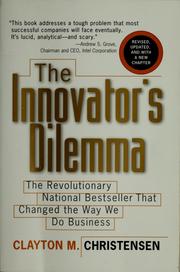


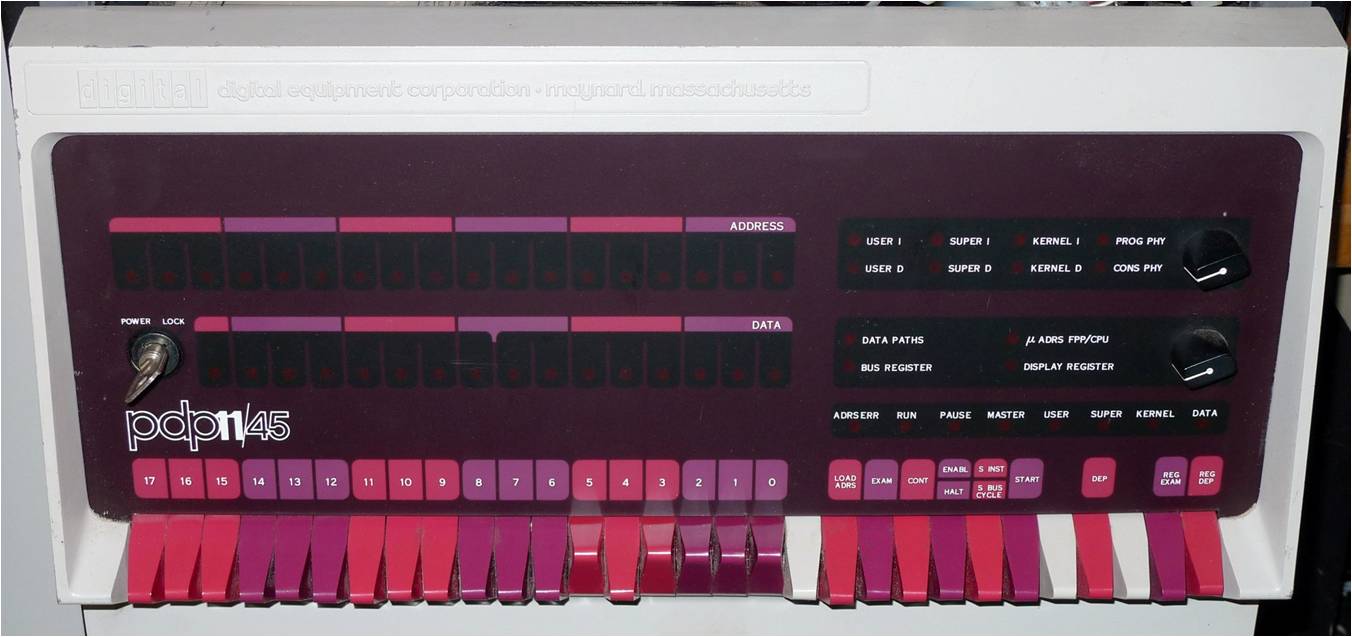 Photo Courtesy Jan Gray

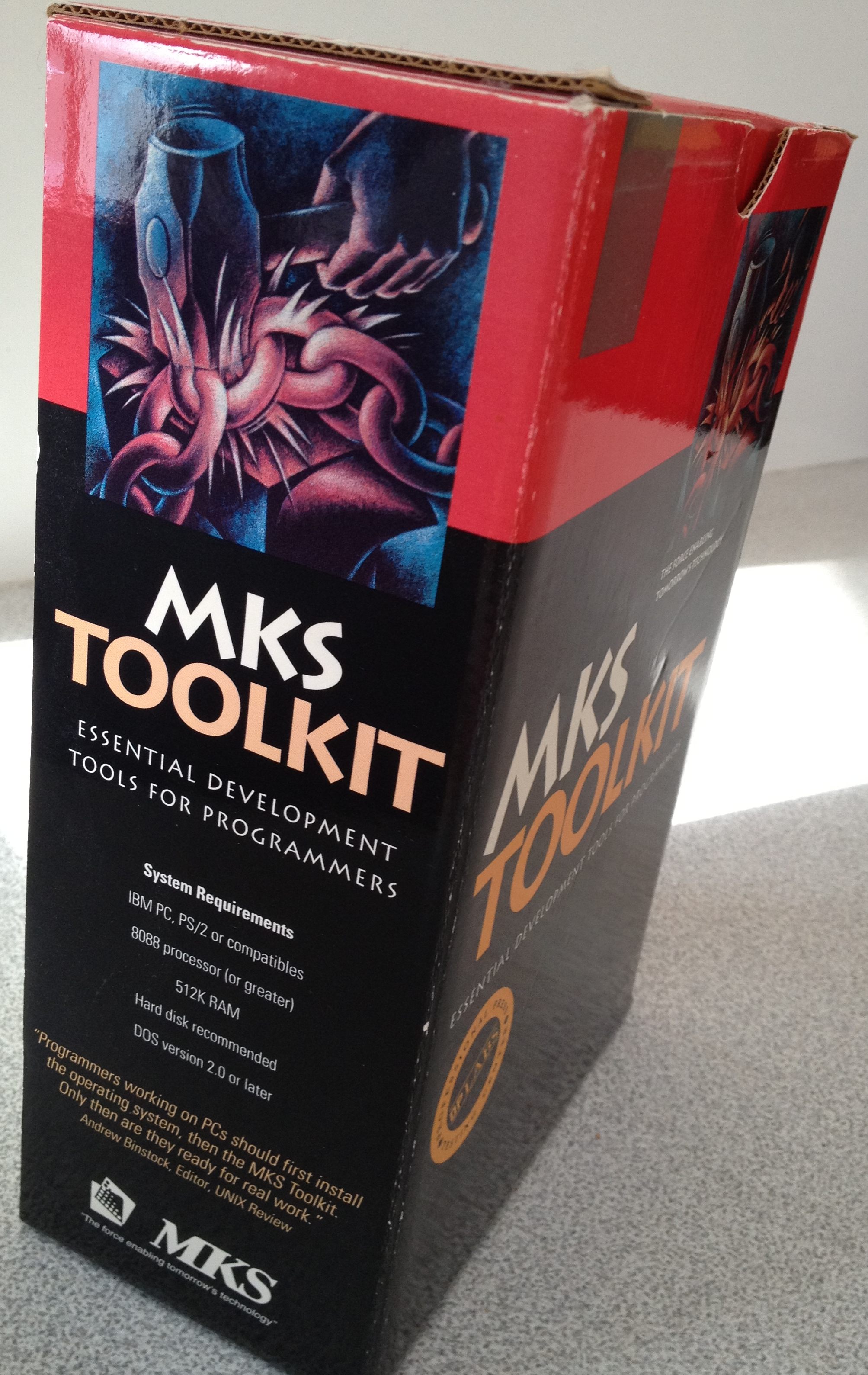
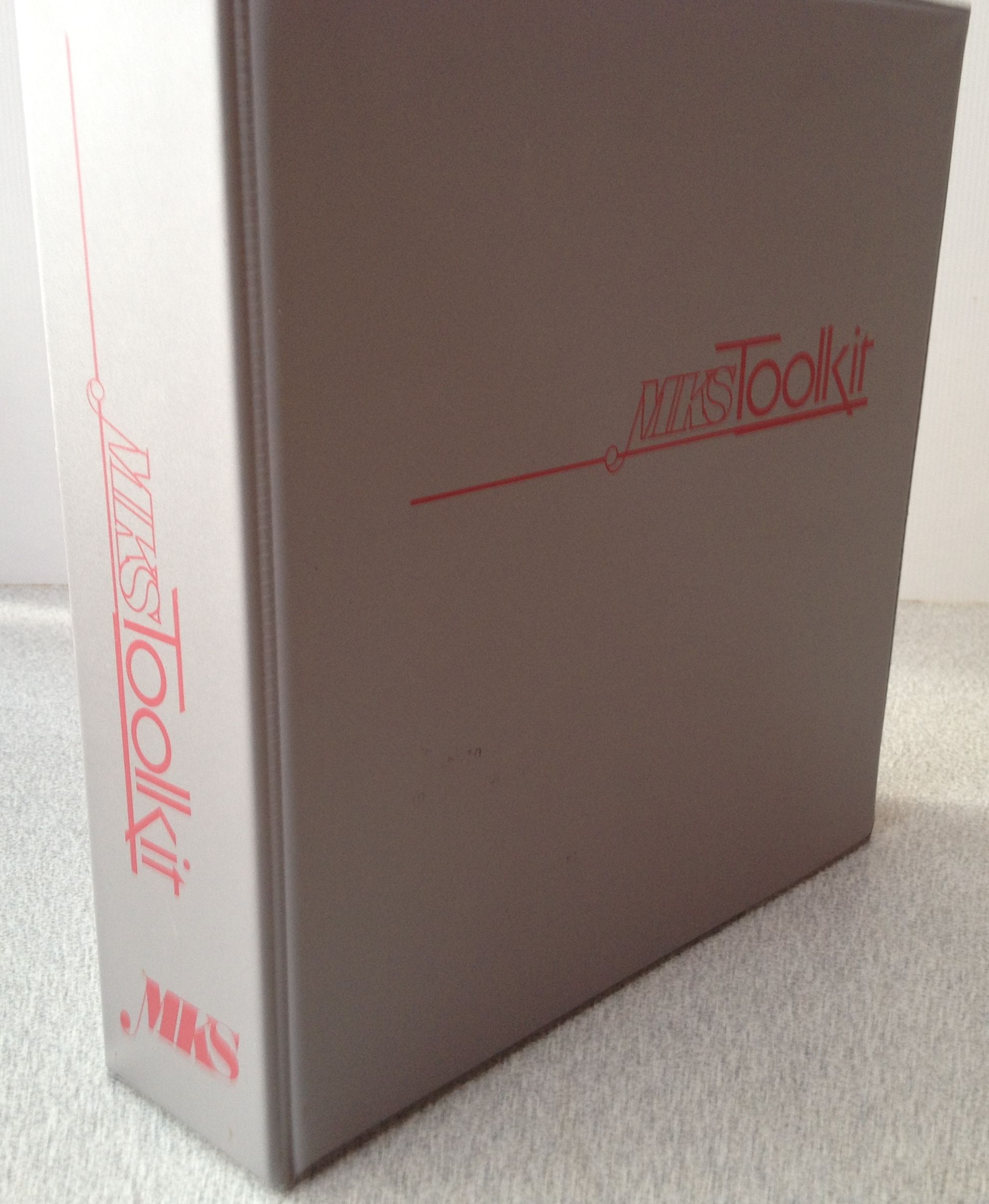 In 1984, I co-founded MKS with Alex White, Trevor Thompson, Steve Izma and later Ruth Songhurst. Although the company was supposed to build incremental desktop publishing tools, our early consulting led us into providing UNIX like tools for the fledgling IBM PC DOS operating environment (this is a charitable description of the system at the time). This led to MKS Toolkit, InterOpen and other products aimed at taking the UNIX zeitgeist mainstream. With first commercial release in 1985, this product line eventually spread to millions of users, and even continues today, surprising even me with both its longevity and reach. MKS, having endorsed POSIX and x/OPEN standards, became an open systems supplier to IBM MVS, HP MPE, Fujitsu Sure Systems, DEC VAX/VMS, Informix and SUN Microsystems.
 During my later years at MKS, as the CEO, I was mainly business focussed and, hence, I tried to hide my “inner geek”. More recently, coincidentally as geekdom has progressed to a cooler and more important sense of ubiquity, I’ve “outed” my latent geek credentials. Perhaps it was because of this, that I rarely thought about UNIX and the influence that talented Bell Labs team, including Dennis Ritchie, had on my life and career. Now in the second decade of the 21st century, the world of computing has moved on to mobile, cloud, Web 2.0 and Enterprise 2.0. In the 1980’s, after repeated missed expectations that this would (at last) be the “Year of UNIX” we all became resigned to the total dominance of Windows. It was, in my view, a fatally flawed platform with poor architecture, performance and security, yet Windows seemed to meet the needs of the market at the time. After decades of suffering through the “three finger salute” (Ctrl-ALT-DEL) and waiting endlessly for that hourglass (now a spinning circle – such is progress), in the irony of ironies UNIX appears on course to win the battle for market dominance. With all its variants (including Linux, BSD and QNX), UNIX now powers most of the important Mobile and other platforms such as MacOS, Android, iOS (iPhone, iPad, iPod) and even Blackberry Playbook and BB10. Behind the scenes, UNIX largely forms the architecture and infrastructure of the modern web, cloud computing and also all of Google. I’m sure, in his modest and unassuming way, Dennis would be pleased to witness such an outcome to his pioneering work.
30 May 2015
0 CommentsSnapshot of the ACA Summit 2015
In mid-April, I attended the 10th annual ACA Summit hosted by Angel Capital Association in San Diego. With about 600 people in attendance from dozens of countries, it was an excellent chance to get tuned into the latest trends happening in angel world at large.
And since Angel Investing is now a global phenomenon, it is interesting to note that ACA Summit can have two faces. On one hand, it is a very international gathering of Angel investors and yet sometimes the content reflects the fact that ACA is primarily an association of US Angel investors, for example by showing trends without regard that Canadian angels are just across the border.
The international range of attendees was striking, with many delegations from various European countries; Latin American countries like Mexico, Chile and Barbados; India; a particular concentration from Australia and New Zealand and of course Canada. Regarding this antipodean concentration, one attendee found it odd that there were more of participants from halfway around the world than from Canada.
I am a member of the program committee for Canada’s own 2015 NACO Summit which is being held October 6-8 in Niagara-on-the-Lake, Ontario, right on the US frontier. I see a huge opportunity to learn and connect with more US and global angels.
Each year, the Angel Resource Institute publishes statistical information and trends in US Angel investing and at ACA released their 2014 Halo Report.
I’ve chosen some personally curated highlights both of that report and the overall conference:
In summary, ACA Summit 2015 was a fabulous opportunity to meet, network and learn from some of the best global angels and understand about emerging models and best practices. Many side bar conversations, dinners and drinks in the garden were packed with wisdom from around the world.
In October, our own NACO Summit will be a great opportunity for Canadians to similarly share and learn and to connect with a more global perspective as our Angel ecosystem continues to grow from strength to strength.